
New Jersey has a mesothelioma problem. The state ranks among the top ten in the nation for annual cases, with approximately 102 new diagnoses and 170 deaths every year. The rate of 0.9 per 100,000 residents exceeds the national average.
The reason traces back decades, to an industrial economy that made New Jersey one of America’s manufacturing powerhouses.
Why New Jersey?
Three industries drove New Jersey’s asbestos exposure crisis: shipyards, chemical plants, and oil refineries.
The Port Newark-Elizabeth Marine Terminal and surrounding facilities employed thousands of workers in the mid-20th century. Shipyards along the Hudson and Delaware Rivers built and repaired vessels that used asbestos extensively in insulation, boilers, pipes, and fireproofing materials. Workers who built, maintained, or served on these ships inhaled microscopic fibers daily.
Chemical plants across the state, particularly in the industrial corridors of Hudson, Essex, and Middlesex counties, used asbestos in equipment insulation and protective gear. Oil refineries in Bayonne, Linden, and along the Arthur Kill similarly relied on asbestos for high-temperature applications.
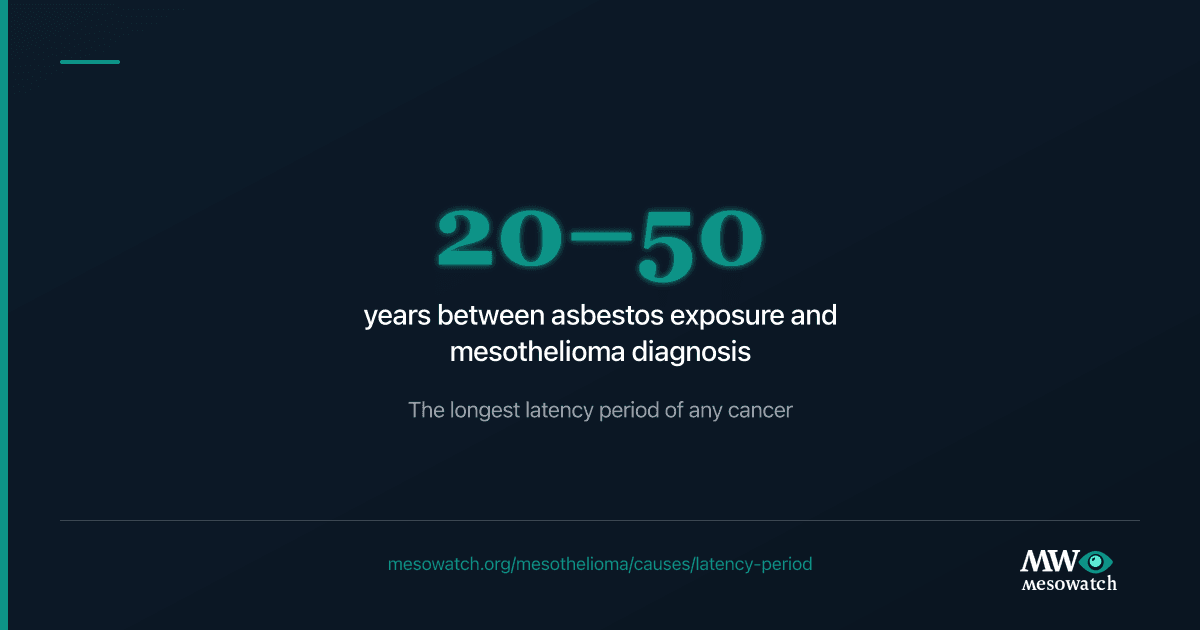
The 20-50 Year Time Bomb
What makes mesothelioma uniquely cruel is its latency period. Workers exposed to asbestos in the 1960s, 70s, and 80s are being diagnosed now, decades after their last exposure. A pipefitter who worked at a Newark chemical plant in 1975 might not develop symptoms until 2025.
This means New Jersey’s mesothelioma crisis isn’t over. Workers exposed before asbestos regulations took effect are still developing the disease. Their children, who may have been exposed to fibers on work clothes brought home, are entering the age range when mesothelioma typically appears.
New Jersey’s Filing Deadline: Two Years
New Jersey law gives mesothelioma patients two years from diagnosis to file a personal injury lawsuit. For wrongful death claims filed by families, the same two-year window applies, starting from the date of death.
This might sound like adequate time. It’s not.
Building a mesothelioma case requires identifying where exposure occurred, often across multiple job sites over many decades. It requires tracking down co-workers who can verify conditions. It requires connecting specific asbestos products to specific manufacturers, many of whom went bankrupt decades ago.
Two years goes quickly when you’re simultaneously fighting cancer and building a legal case.
What Compensation Exists?
New Jersey mesothelioma patients have several compensation options, often pursued simultaneously.
Personal injury lawsuits target companies still operating that manufactured or used asbestos products. These can result in settlements or verdicts ranging from hundreds of thousands to several million dollars.
Asbestos trust funds hold approximately $30 billion for victims across more than 60 bankruptcy trusts. Many New Jersey workers qualify for claims against multiple trusts based on their exposure history. Combined trust fund compensation typically ranges from $300,000 to $400,000.
New Jersey also allows workers’ compensation claims for occupational diseases, though these are subject to separate rules and limitations.
For veterans who served in the Navy or worked at military facilities like the former Naval Air Warfare Center in Lakehurst or Fort Dix, VA disability compensation may be available in addition to civilian claims.
Clinical Trial Access
One advantage of New Jersey’s location is proximity to world-class cancer centers. Currently, 20 mesothelioma clinical trials in new jersey or nearby, including Memorial Sloan Kettering facilities in Basking Ridge, Middletown, and Montvale, Rutgers Cancer Institute in New Brunswick, and Hackensack University Medical Center.
What Families Should Know
For anyone in New Jersey recently diagnosed with mesothelioma, or families who have lost someone to the disease, the critical first steps are documenting work history thoroughly and understanding that the two-year deadline is a hard cutoff with limited exceptions.
Trust fund claims, lawsuits against operating companies, VA benefits, and workers’ comp aren’t mutually exclusive. Many patients pursue all available paths simultaneously.
For New Jersey-specific filing deadlines, exposure sites, and legal resources, see the New Jersey Mesothelioma Lawyers guide at MesoWatch.